
String Theories
Liner Notes For Matt Combs; WMOT Coverage of: Allison Russell, Aaron Lee Tasjan, Ismay, and Sweet Megg
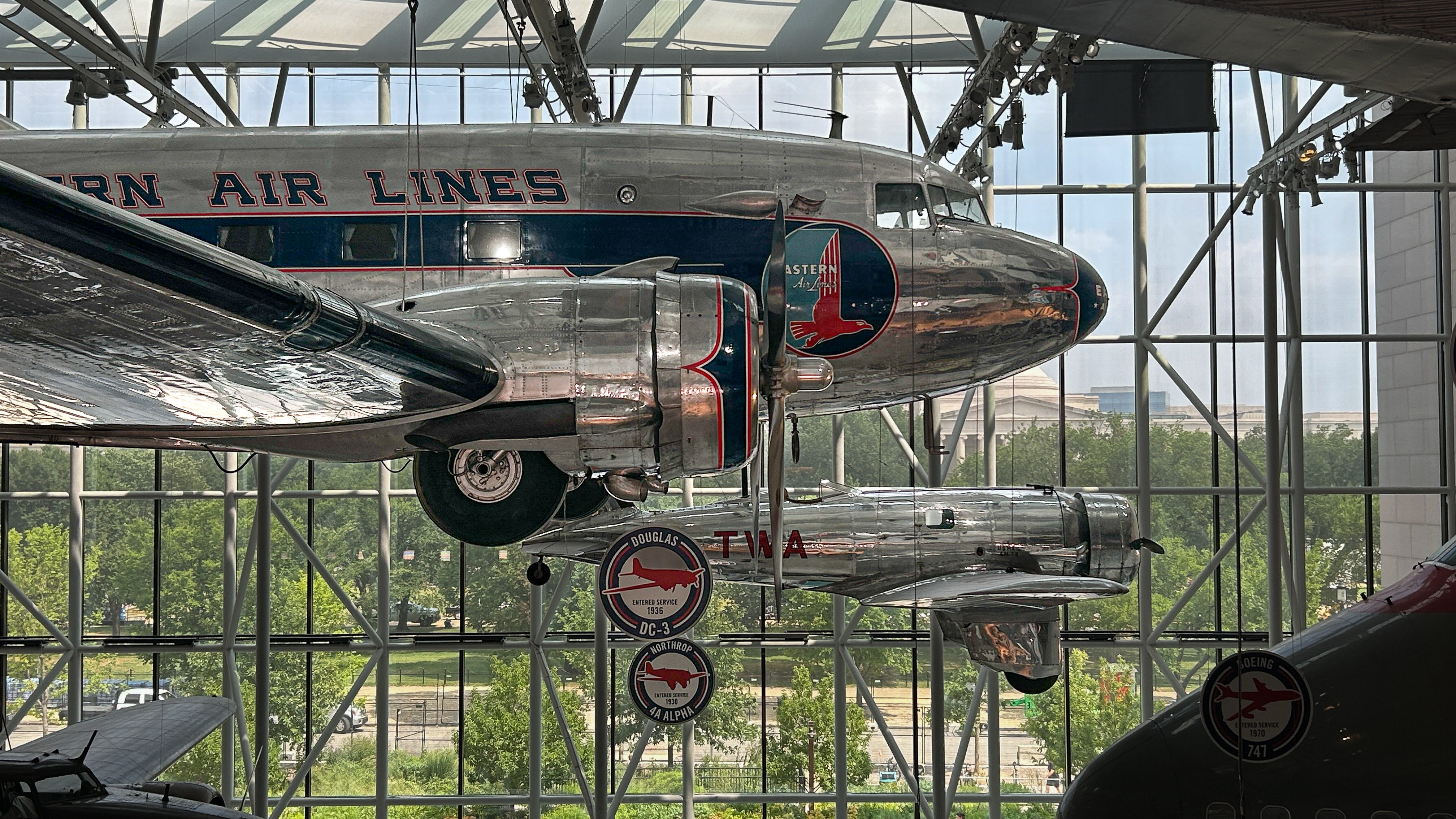
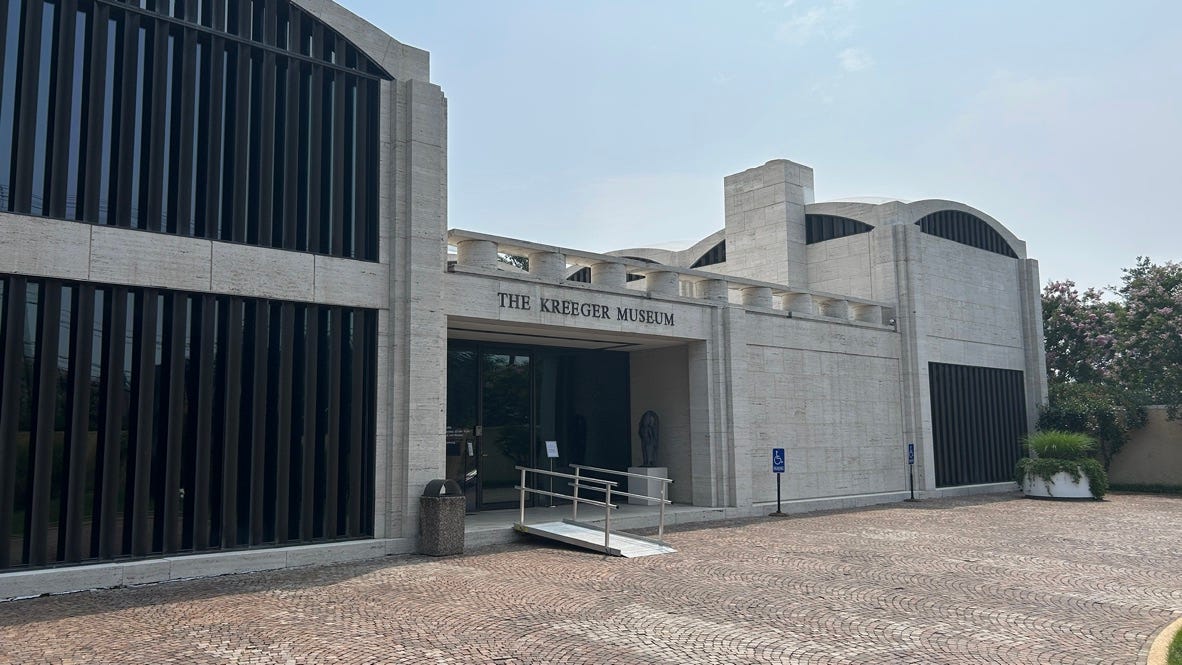
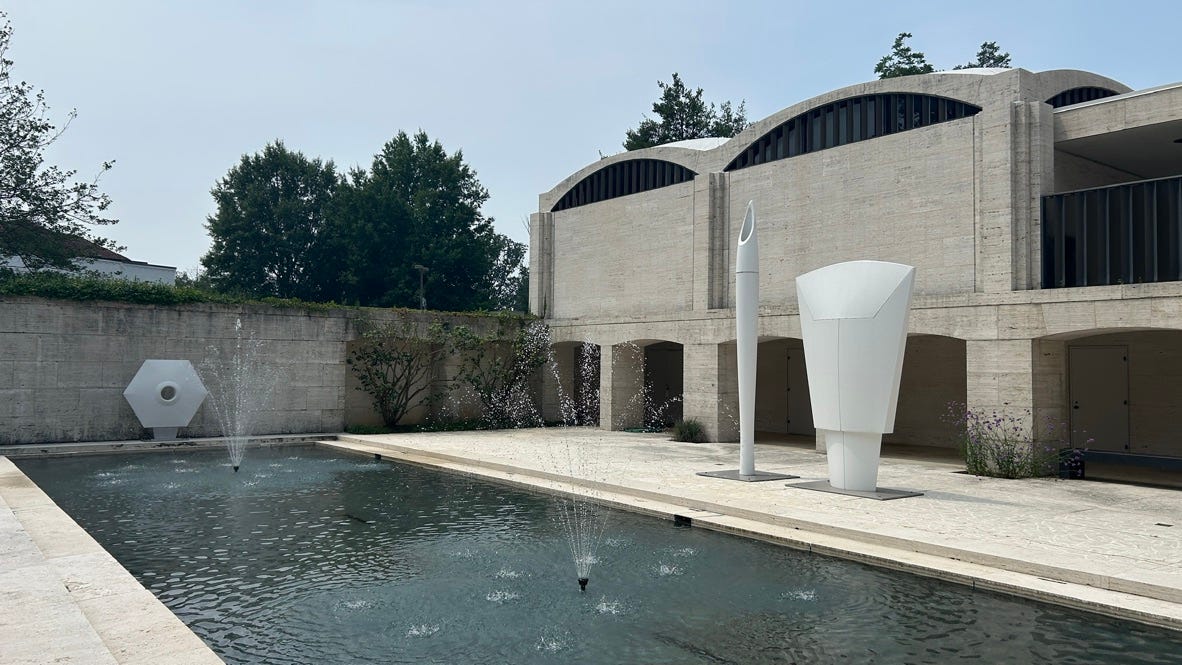
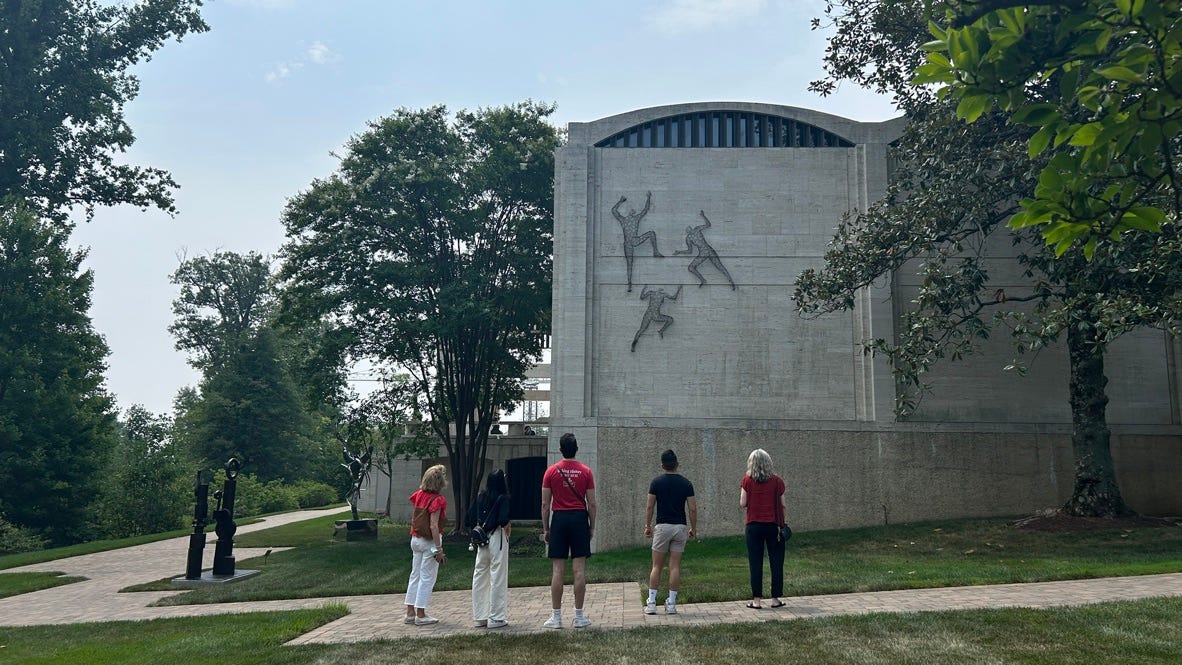
It’s good to be home after some post-birthday travel, including a couple nights seeing Phish in Savannah with my great friend Charlie and then four days of sights, food, and family visits in the DC area. My sister, who generously drove from WV to meet us there, suggested the Kreeger Museum near Georgetown, and it proved to be one of my favorite collections and buildings I’ve ever visited. Great idea. I’ve shared some photos of it down below. The photo above is from my solo, 90-minute zip through the Air & Space Museum, which was nostalgic for me because I’ve spent days there during past stretches of my life living in the DC area. I am happy to report that the refurbished museum is still woke, with plenty of information about pioneering women and African Americans in aviation. Don’t alert Pete Hegseth.
Below are recent WMOT features and interviews with some fascinating musical folk. If you follow Americana you’ve likely heard and like Allison Russell and Aaron Lee Tasjan. But zoom in on Sweet Megg and Ismay, who are both bringing exceptional individual vision to American roots.
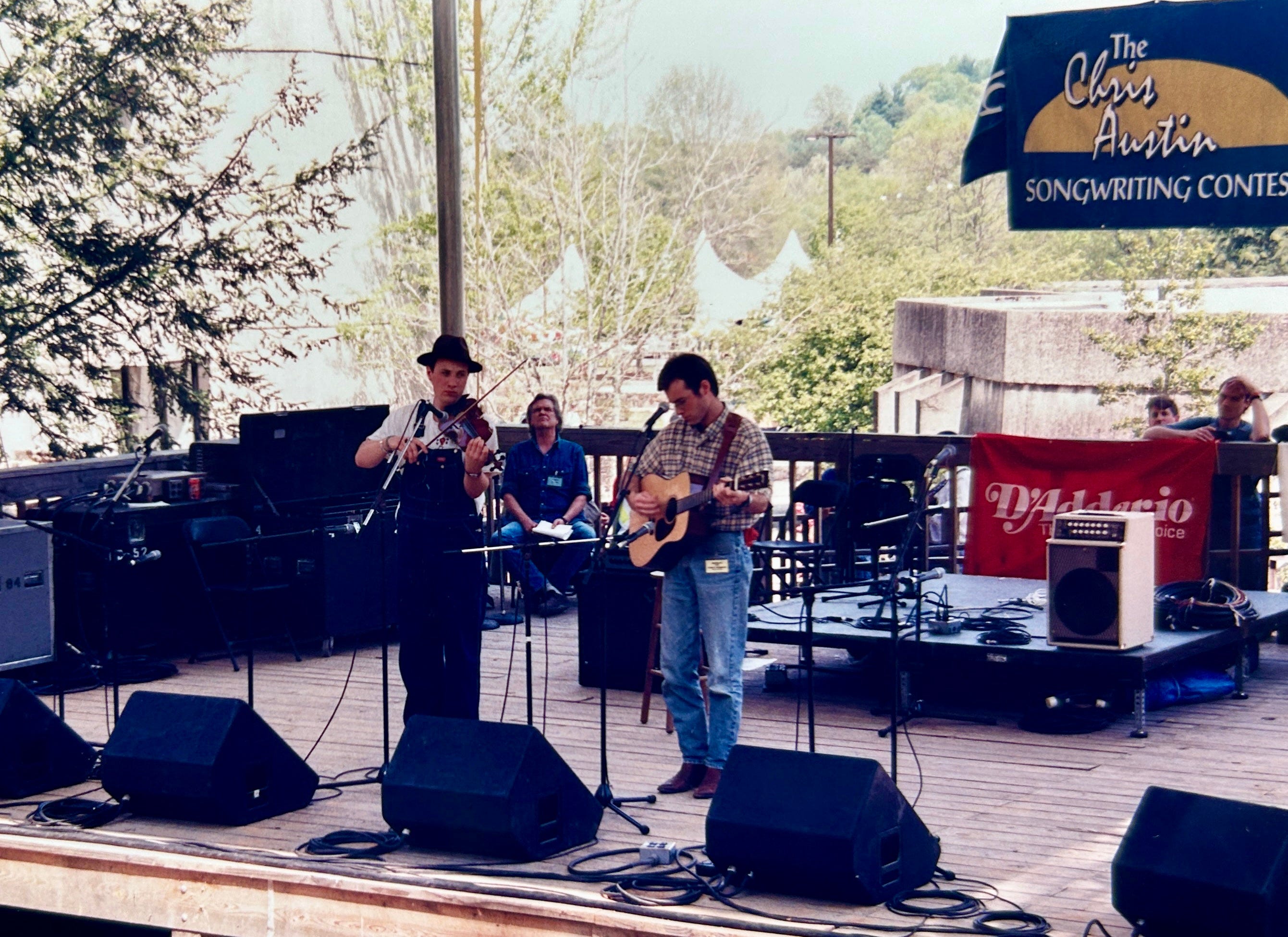
First though, an essay I wrote at the suggestion/invitation of my old friend Matt Combs that is being published here for the first time before it goes into service as the album notes/bio for Matt’s album Fifty Years Of Clown School, which comes out Aug. 21. The content and backstory is all in the piece, except for a personal note to say that I was so lucky to meet Matt very soon after he arrived in Nashville in the latter 1990s. We did a lot of pickin’ in the day, and he even backed me up when I unexpectedly became a finalist in the Chris Austin Songwriting Contest at Merlefest in 1998. (We are pictured below, with Guy Clark, one of the freakin’ judges, looking on; I did not win.) In 2003, Matt put in a good word with his band boss Mike Snider, who dropped in with his string band to play world-class old-time music at Taylor’s and my wedding eve barn dance in Ridgetop, TN while on their way to play the Grand Ole Opry. Matt schooled me on the genius of John Hartford, even as he was wending his way into Hartford’s inner circle and band. It’s been a joy to watch him build an elite-level career and a wonderful family. Come out to Matt’s album release circus at the American Legion Post 82 on Aug. 18. Now, on with my new take on Matt and his important album.
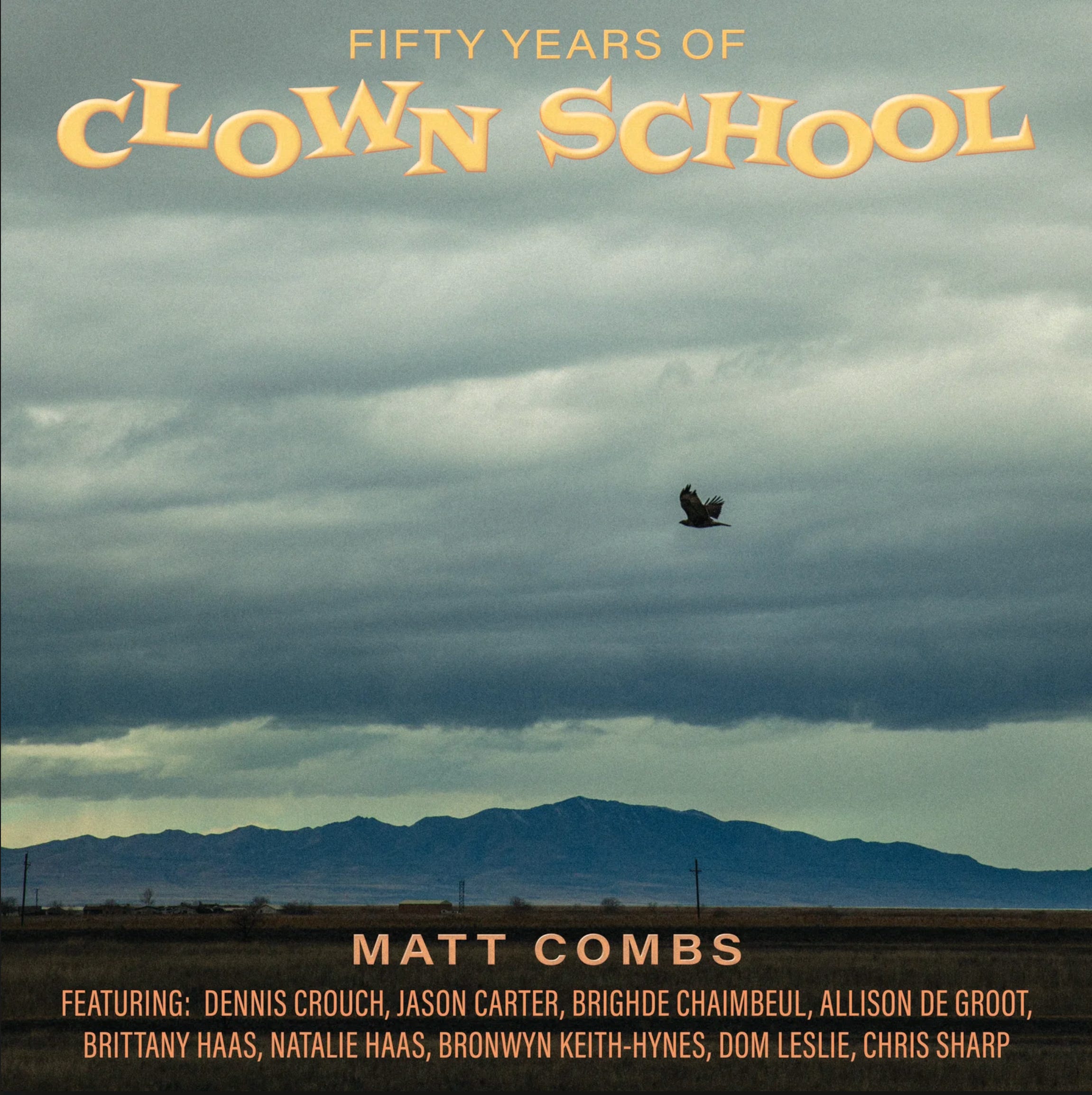
Matt Combs ~ Fifty Years Of Clown School
The normal way to say it is that Nashville fiddler Matt Combs has quietly put together one of the most impressive sideman careers in modern Music City, working with his heroes on tour, on records, and on the Grand Ole Opry. But that’s not how he understands it. Matt looks back and sees mostly weirdness, whimsy and happy accidents along a shambolic path that started 35 years ago, when he threw in with a band of gypsy buskers and street clowns.
This isn’t a myth or a metaphor. The summer before he started as a classical violin major at the University of Michigan, Combs attended the prestigious Aspen Music Festival as a player and student. There in the high country of Colorado, between rehearsals of Mahler and Stravinsky, he met Jeep, a banjo player and street performer, and his wife Rebecca. Their 35-foot RV was the gathering place for Aspen’s itinerant musicians, contortionists, and jugglers.
“So this was my 18-year-old introduction to the fiddle - hanging out with basically hobos and freaks. And that’s what took me from the Aspen Music Festival world into the fiddle world - literally through the guidance of a clown named Jeep,” Combs says, now in his 51st year. “I worked as a clown as well. He taught me how to tie balloons.”
This is just a bit of the personal lore that explains why an undeniably serious musician would release his first solo album in 25 years under the title Fifty Years Of Clown School. This 13-track collection of original tunes, performed with some of Matt’s most distinguished colleagues in the string band scene, mingles the old-time lineage of Appalachia, the practiced looseness of Nashville’s studio A-Team, and the precision and nuance of classical music.
It’s no surprise that the tunes bear hallmarks of Matt’s friend, boss, and mentor John Hartford, the late bluegrass visionary who’s become as big an influence on modern Nashville acoustic music as Bill Monroe or Earl Scruggs. Also from Team Hartford came multi-instrumentalist and singer Chris Sharp, who proved invaluable as the album’s co-producer. Combs and Sharp had been bandmates under Hartford’s eye back when they were growing into the musicians they are today. Sharp knows Matt well enough to understand where he was going when he gathered the musicians at his home studio to learn and record his new music.
Matt set the tone by playing for everyone a recording that had become recently important to him - the opening three minutes of the second movement of Beethoven’s Seventh Symphony, a stately but inspiring theme and variations, famous in some circles for its spiritual qualities. “It’s healing music,” says Combs. “I mean, there’s so much push and pull, tension and release, and development of the orchestration around a very simple melody. It really started to strike me that this is what fiddle music can do. I want these pieces to kind of feel like that.”
The musicians got it too. Because they’ve had their own crossover experiences in trad and formal music. They are: fiddler Brittany Haas and her cello-playing sister Natalie, Dominic Leslie on mandolin, Allison De Groot on old-time banjo, and Dennis Crouch on bass. Brighde Chaimbeul plays Scottish small pipes. In addition, bluegrass power couple Jason Carter and Bronwyn Keith-Hynes came by to triple up the fiddles on the tune “Bluegrass Country Club,” an homage to the Station Inn, the bluegrass bar where Combs started his Nashville journey.
The tunes were written in a rush of creative energy during a challenging time in Matt’s life on a new fiddle he’d acquired from the bluegrass legend Stuart Duncan. They evoke memories from Matt’s life, from the sentimental to the absurd. Being born on April 1 led to “The April Fool,” a guide-light tune on the album. “Stoppin’ And A’ Startin’” references Matt’s intense tutelage while working for bluegrass icon and surreal personality Jimmy Martin. “The Rogue Scholar” was inspired by his life-loving brother, who died too young. His daughters are celebrated in “Two Peoples,” “Little Owl’s Retreat,” and “Light Weaver.” Especially endearing is “Buddy And Big Fella,” a tune with sections in two time signatures that evoke Matt and his wife Rachel, named for the nicknames given them by their youngest daughter.
Unlike songwriters, who describe and unpack such stories with words, Combs and his collaborators lean on melody, counter-melody, motive bass lines, and pulse. And the effect is enthralling. The parts weren’t written out. The musicians heard Matt’s statement of the tunes, internalized them, and then iterated parts in real time that sound like they came from the hand of a skilled composer.
Combs really was born on April Fool’s Day, but his family, including a professional percussionist father and a bass-playing brother, took music seriously as he grew up in Wichita, KS. The Combs Family Band offered the young violinist Matt his first adventures outside of his classical music training. He finished his violin degree, but by then he’d been overwhelmed with love and fascination for bluegrass and traditional fiddling, proving his bona fides by winning the Rockygrass Fiddle Championship in Colorado in 1996.
Matt headed for Nashville, where he knew absolutely nobody. He had an ear for whom to seek out however, and study with veteran Tennessee fiddler Frazier Moss led him to Hartford, the renaissance man who would change Matt’s life. Matt lived a few doors down from Hartford for some time (evoked in the tune “Madison Waltz”) and became a member of his band before and during Hartford’s last major run in the spotlight as a lynchpin of the historic O Brother, Where Art Thou? soundtrack. Combs was a virtual part of the family when Hartford died of cancer in 2001.
Matt also freelanced in country and bluegrass, doing stretches with Jimmy Martin, country crooner Ray Price, Nashville icon Reba McEntire, old-time Grand Ole Opry staple Mike Snider’s String Band, and the prestigious Opry House Band itself. He’s performed with Patty Loveless, Marty Stuart, Jerry Douglas and others. In more recent years, he’s been more involved in Americana music, including a role as the go-to string arranger for Easy Eye Records. His recent recording credits include The Autumn Defense, Kacey Musgraves, The Black Keys, Brothers Osborne, Cage the Elephant, Hermanos Gutiérrez, Sturgill Simpson, Loretta Lynn, and Yola. And he’s continued to nurture Hartford’s legacy as co-author of the Mammoth Collection of Fiddle Tunes anthology and producer of one of its multi-artist companion albums.
On Fifty Years Of Clown School, Combs brings a bit of all these experiences to bear, adding an important statement to Nashville’s world-changing string band legacy, one that includes Bill Monroe’s Blue Grass Boys, the Nashville Bluegrass Band, East Nash Grass, and Hawktail. He pays implicit homage to the elegantly rustic Rising Fawn String Ensemble that featured Norman and Nancy Blake, as well as fiddler James Bryan, Matt’s father-in-law. And overall, there’s a playfulness and sentimentality that reflects the complete and complex soul that is Matt Combs. He’s not stepping out as a leader for good and all with this graceful album, but it’s a highly collectible document of an important career that has many years to go.
Photos From The Kreeger Museum
RECENT WORK
As usual, click on the image or headline to visit the full story with streaming audio.


😊
Ouch, I didn't realize it was that old - I'm a month short of 83... :-)