
String Theories
Pat Metheny And Other Nashville Shows; Reading Infinite Jest; Musicality Speech; Remembering Justin Townes Earle and Ronnie Bowman; O Brother At 25
Two Weeks With Highly Musical Humans
I wish I was in Knoxville, which sounds like the first line of a bluegrass song, but what I’m missing is this year’s Big Ears festival. As I say in Chapter 24 of MFMH, Big Ears is “the nation’s premiere showcase for progressive music from just about every genre…a focal point for artists from America and the world who live an ethos of unfettered creativity.” I’ve been four times, twice early in its run and then for the past two years, which were extraordinary. I just couldn’t make it work this year. I made a pitch to have my book included in some way but I didn’t hear back. I’d love to speak there next year if anybody’s listening. I’m writing about this not to lament but to point out that there are more and more opportunities to catch “big ears” music here in Nashville, including two acts playing Knoxville this weekend, so let me tell you about such experiences from the last two weeks, based entirely on memory, because this was me time, and I wasn’t taking notes!
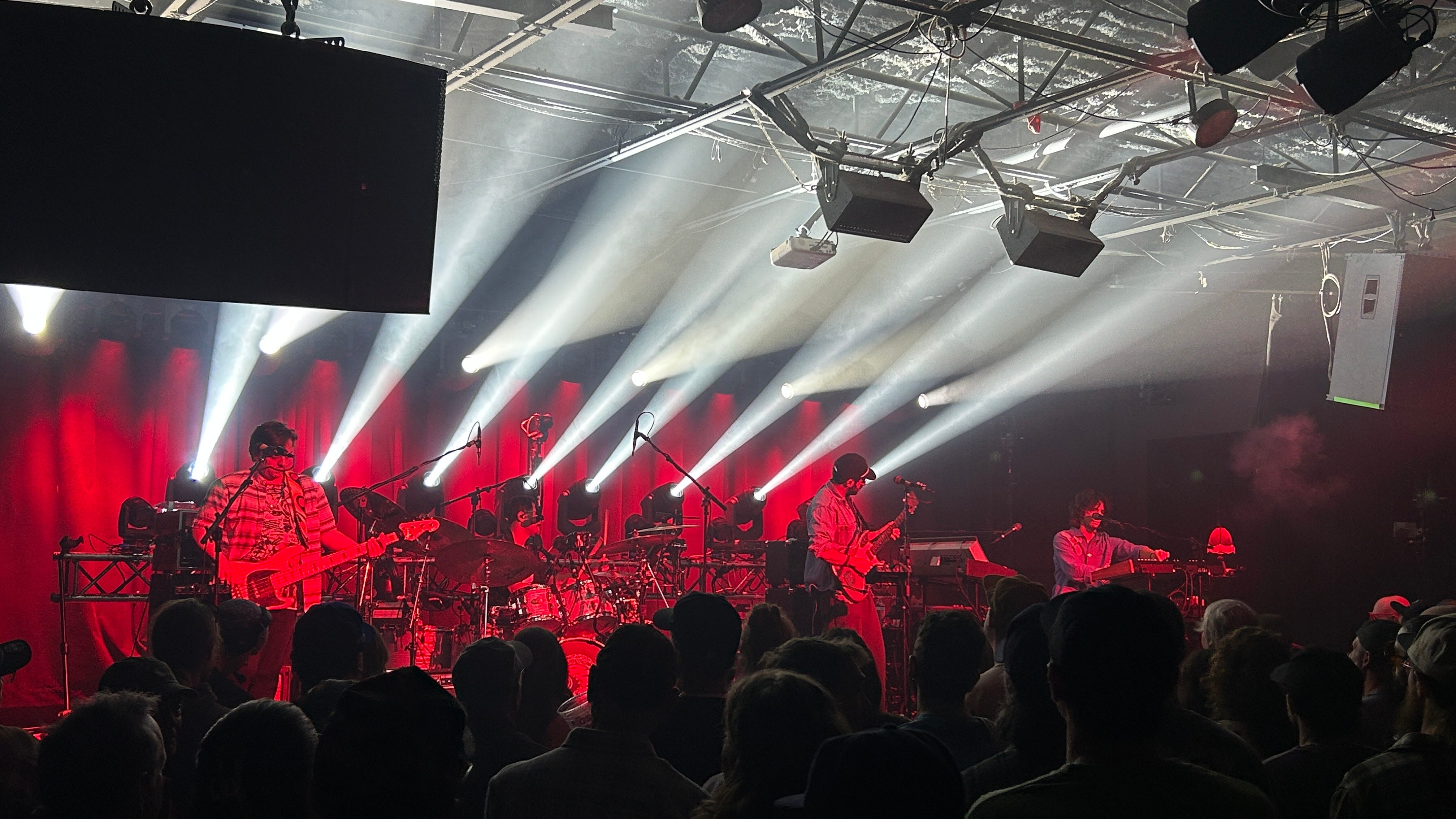
On March 18, my friend Tom, an aficionado of the jam so fervent he deserves an award, invited me along to be his plus-one for a band called Eggy at the Basement East. Formed ten years ago in New Haven, CT by four high school friends, they’re one of those respected jam bands you can see in human scale venues. I actually had my Eggy awakening two summers ago at Floydfest, and I was entranced pretty quickly. They no doubt borrowed some Phish-isms in their spunky interactions, but that’s good source material, and they brought their own unique energy and sense of fun, along with, if I may be so bold, better songwriting. At the BEAST, I got lost in Eggy’s sound swirl. These cats listen to each other vividly, building slow burns and sojourns more than the climax/descent roller coaster that is the jam band stock in trade. They were more about a meshed communal intelligence than individual wailing. Tommy and I kept remarking on the bass player (Mike Goodman) and how sharp and creative he was. But that could be said for all hands. They brought Nashville fiddler/violinist John Mailander on for some sweet soloing, and hey, he was in my last newsletter for his intimate Urban Cowboy gig with Jack Silverman. I’ve never been called an egg-head, but I’m an Eggyhead going forward.
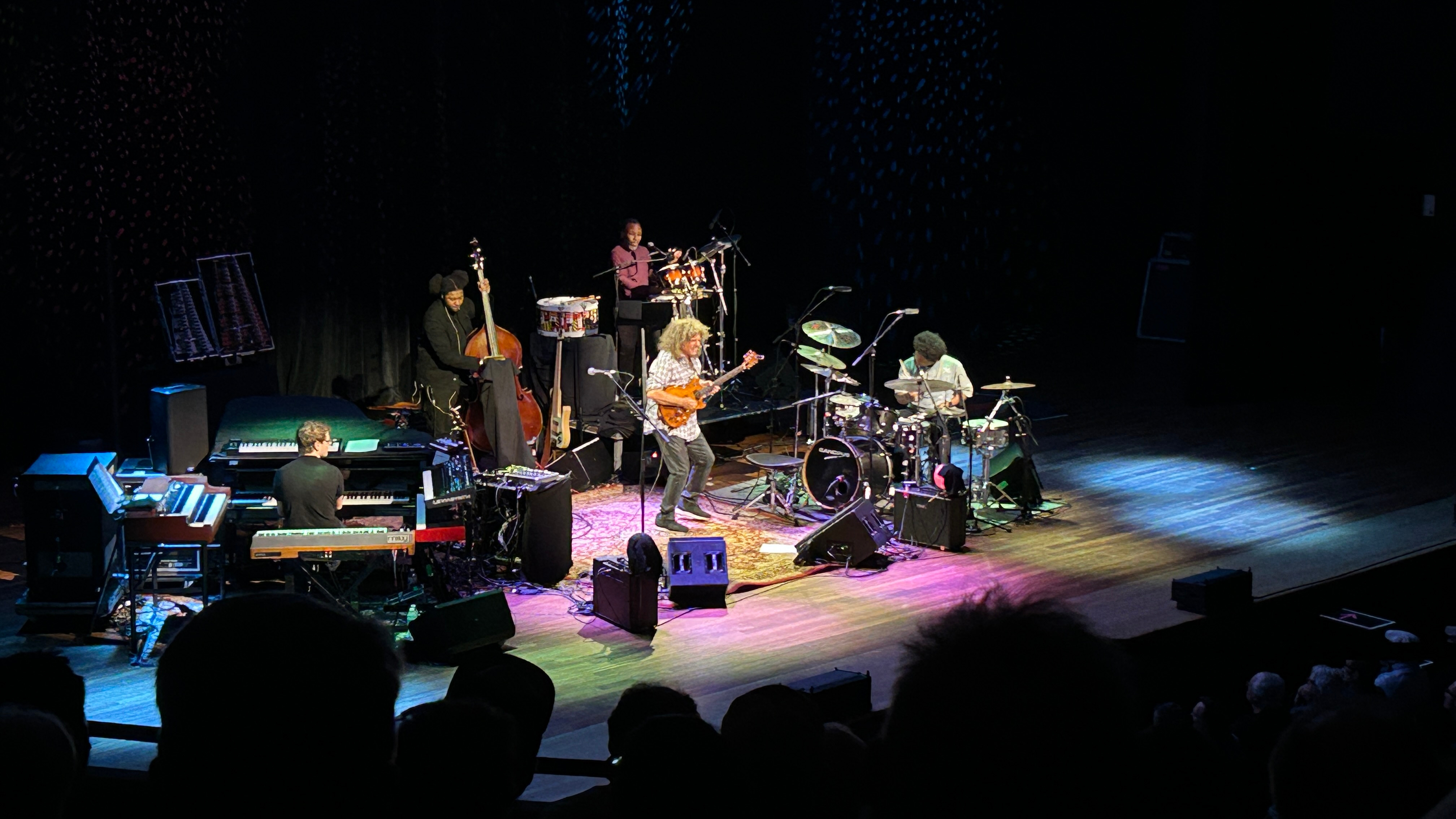
March 22, a Sunday night, I met my old Music City Roots compadre John Walker downtown for a catch up over some raw oysters and the best concert value I’ll have all year - Pat Metheny’s Side Eye band at the Ryman for less than $60 all in. Metheny was the first contemporary instrumental guitarist and composer I discovered growing up, and he became foundational to my love of jazz. A friend’s brother had his album American Garage, and I was moved to buy my own copy of a live double LP called Travels, released in 1983 when I was a junior in high school.
It was the first music that I felt personally invested in and imprinted by, because it captured the melodic and harmonic rhapsody of the classical music that dominated my home and my music lessons, along with the silvertone beauty of varied guitars and a band that played a meshed rhythmic language I’d never heard before. I listened to Travels relentlessly until it was in my bones. It was my own find and my own personal love, yet I was pleased that my parents found it appealing too. (They love opera and chamber music but they were never snoots about it.) In fact they once had a dinner party where they set up tables and lights in our backyard on a summer evening and they let me put my Soundesign stereo speakers in the window of my room and play DJ. Really what I did was spin Travels on repeat. The way it sounded outside on the sweet night air, so lyrical and floating, made an imprint on me, and I remember my Mom saying that it suited the situation perfectly. I took away some deep feelings about sound and setting from that experience.
I’ve followed and adored Pat ever since. I had a guitar teacher once who (half) snarked about his smooth and limpid qualities as “Pat My Weenie” music, but that’s cynical. I’d put it this way: that Metheny embraces beauty fully and fiercely. While he’s released some more difficult and edgy music in his career, his brand is a lush, pastoral Americana that holds up to close listening even as it can enhance a garden soiree. Now, Metheny’s Side Eye band is a collective of players much younger than he (71) whom he encountered just listening to the emerging musicians in New York. He’s released three albums with a variety of players, but on this tour, he’s out with Chris Fishman on piano/keyboards, Joe Dyson on drums, Jermaine Paul on bass, and sometimes vocalist and percussionist Leonard Patton, about whom more soon.
The repertoire on this tour is a mix of very new and very old, and as wary as I am of devoting too much of our musical attention to music-as-nostalgia, this was some deep memory sound I needed to hear. He went all the way back, playing the title cut from his debut album, 1974’s Bright Size Life, where Metheny’s soundprint was truly established. From Travels, I got to hear my beloved “Phase Dance” and the show’s finale, “Are You Going With Me?” He offered the title track of 1984’s “The First Circle,” one I picked up on vinyl years later. This is one of many from Pat’s catalog with long composed sections for wordless voice, and that’s where Patton took over. Through the show he acted as the percussionist, adding colors to Dyson’s artful drumming, which Walker aptly compared to the late Jack DeJohnette (a frequent collaborator of Pat’s). But when Patton sang, he built emotional layers that broke through the heady vibes and grooves and just collapsed my chest. Chills and tears. For a few minutes, I was 16 again, and that’s okay.
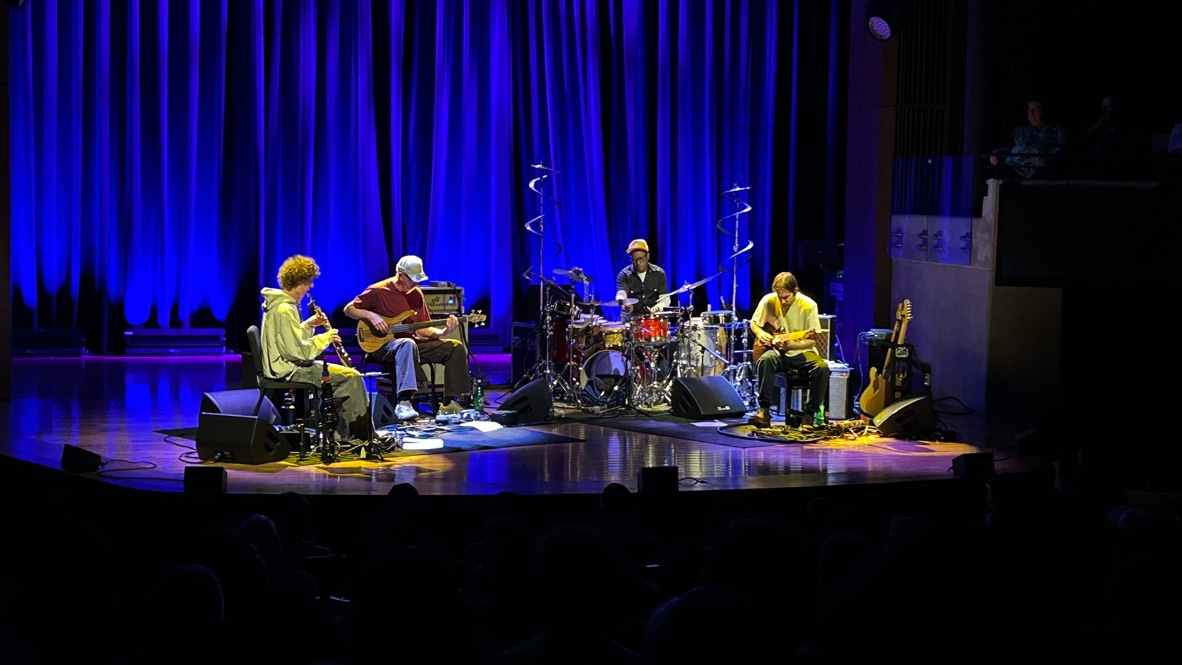
Then on Wednesday, I went solo to catch a peerless quartet led by power duo Pino Palladino and Blake Mills, two of LA’s most revered studio musicians. Paladino is a 68-year-old veteran bass player whose resume includes multiple albums and tours with the likes of John Mayer, The Who, Miley Cyrus, Paul Young, etc. Mills, a generation younger at 39, is a guitar player who came up with the guys from Dawes and grew into a hot producer. He’s worked with Dylan, Fiona Apple, John Legend, Weyes Blood, and Americana artists like Lucinda Williams and Amythyst Kiah. Building on a friendship, Palladino and Mills collaborated on the 2021 instrumental album Notes With Attachments, 31 minutes of supple, subtle compositions that blended off-kilter yet infectious beats with profoundly interesting timbral ideas on stringed instruments. Key to that and to a second album released in 2025 was the wind/horn playing of Sam Gendel, who warps and modifies and sometimes outright synthesizes his instruments. It’s mesmerizing and inventive and just what a lot of us searchers are looking for.
I saw them perform at the 2024 Big Ears festival and I was astonished that such tricky, layered music could be played live in all of its counter-intuitive motion. So when they booked a night at the CMA Theater, probably the best pure listening hall in town, I had to go. So, it seems, did every professional picker and studio cat in town. I saw Jerry Douglas, Royal Massat (Billy Strings’ bass player), Dave Pomeroy, and many many dudes with that musician look. I met some of them in my row. So, oh god, it’s that “musicians’ musician” thing I hate. Because this is music that’s easy to get lost in and love for civvies too. It’s the opposite of abrasive. It’s atmospheric and levitating. And it’s all about the sound. The band didn’t speak to the audience (though they had some smiling inside remarks among themselves). It was like being at a rehearsal, and I say that with love.
What I came home and wrote about right away so as not to forget was Sam Gendel’s performance. He plays two related but very different instruments. His soprano sax is traditional, but he plays it through so many effects boxes that he can sculpt his sound ad infinitum. With stocking feet he twiddles knobs and toggles pedals on and off. He also plays an air-triggered sythn sax whose possibilities are limitless. During one of the night’s more vigorous fusion tunes, he took a sound-clone “piano” solo that was as authentic as it was daring and dazzling. Listen to That Wasn’t A Dream, the group’s most recent disc. Maybe put on headphones. And let it woo you.
Thanks for letting me go on and on. These musical wonders are all around us. I hope you treat yourself to something live and brain-stretching soon.
Talking Musicality At Vanderbilt
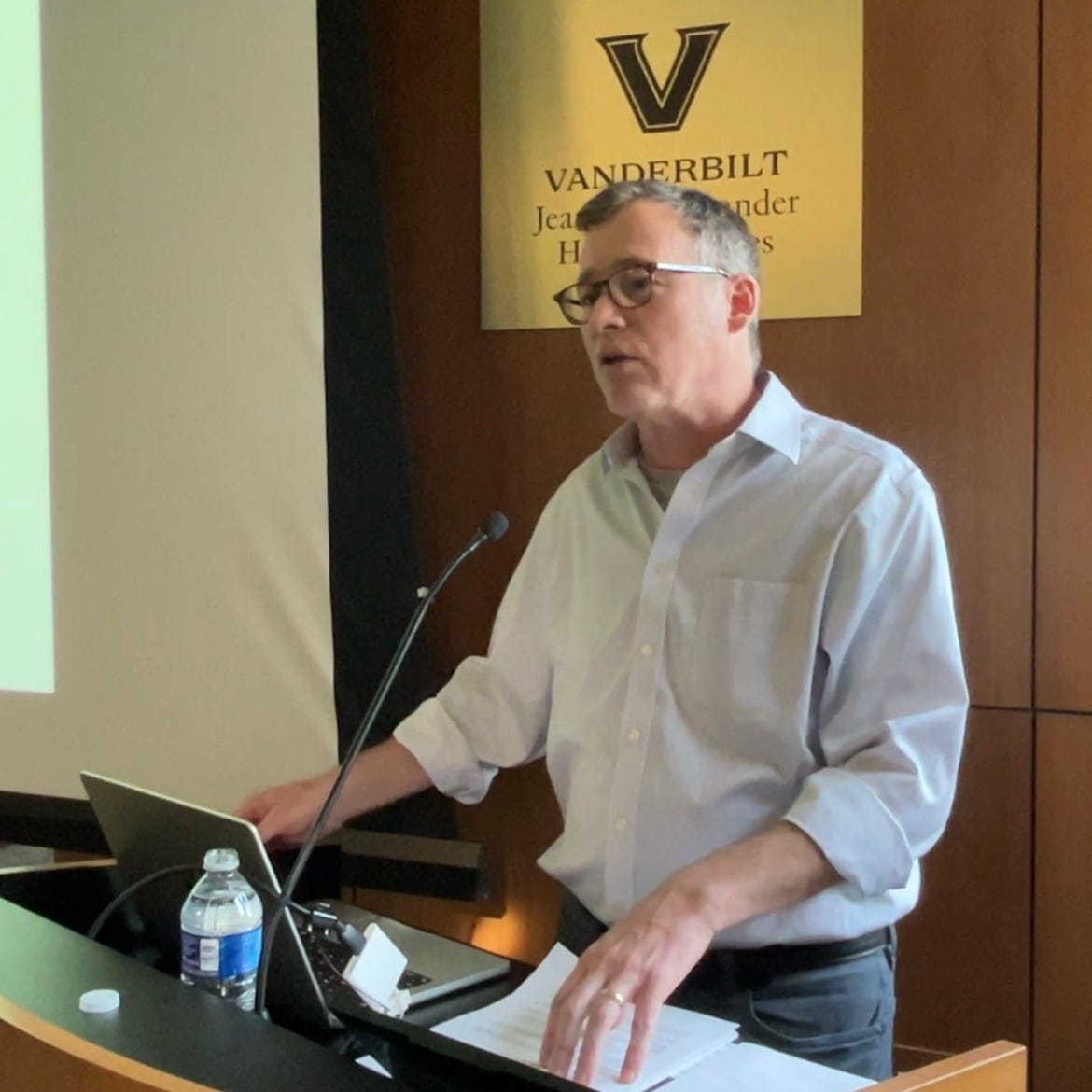
My talk on “A Sound-First Journey In Music” came off quite well at Vanderbilt Library last week. The turnout was very good (thanks folks!), and I appreciated especially meeting the younger music students who came. From my wrap up:
“Music is a vehicle for some of the highest purposes and virtues - beauty, truth, empathy, connectedness, pleasure and mental health. Of all the arts, music I think is the most visceral and intuitive and relatable. And I think we as a country are tapping only a fraction of this inexhaustible resource.
I wanted to explore what I have come to think of as on-ramps to the musical freeway - and I turned to my own musical epiphanies across my life to see what I could learn about what makes people stop what they’re doing and turn toward some new musical sound or feeling and get excited about leaning in and learning more.”
SO HELP ME I’M READING INFINITE JEST
In 1990s America (precipice of the millennium America) author David Foster Wallace went supernova. His Infinite Jest was a phenomenon, a signifier of a new era in English literature, a 1,000-page experimental novel that some read and many owned, as they’d say. I was an owner. I gave it a try in the early 2000s and was so befuddled and queasy by page 150 that I quit. Then that wide, sky blue spine sat on my shelf for decades.
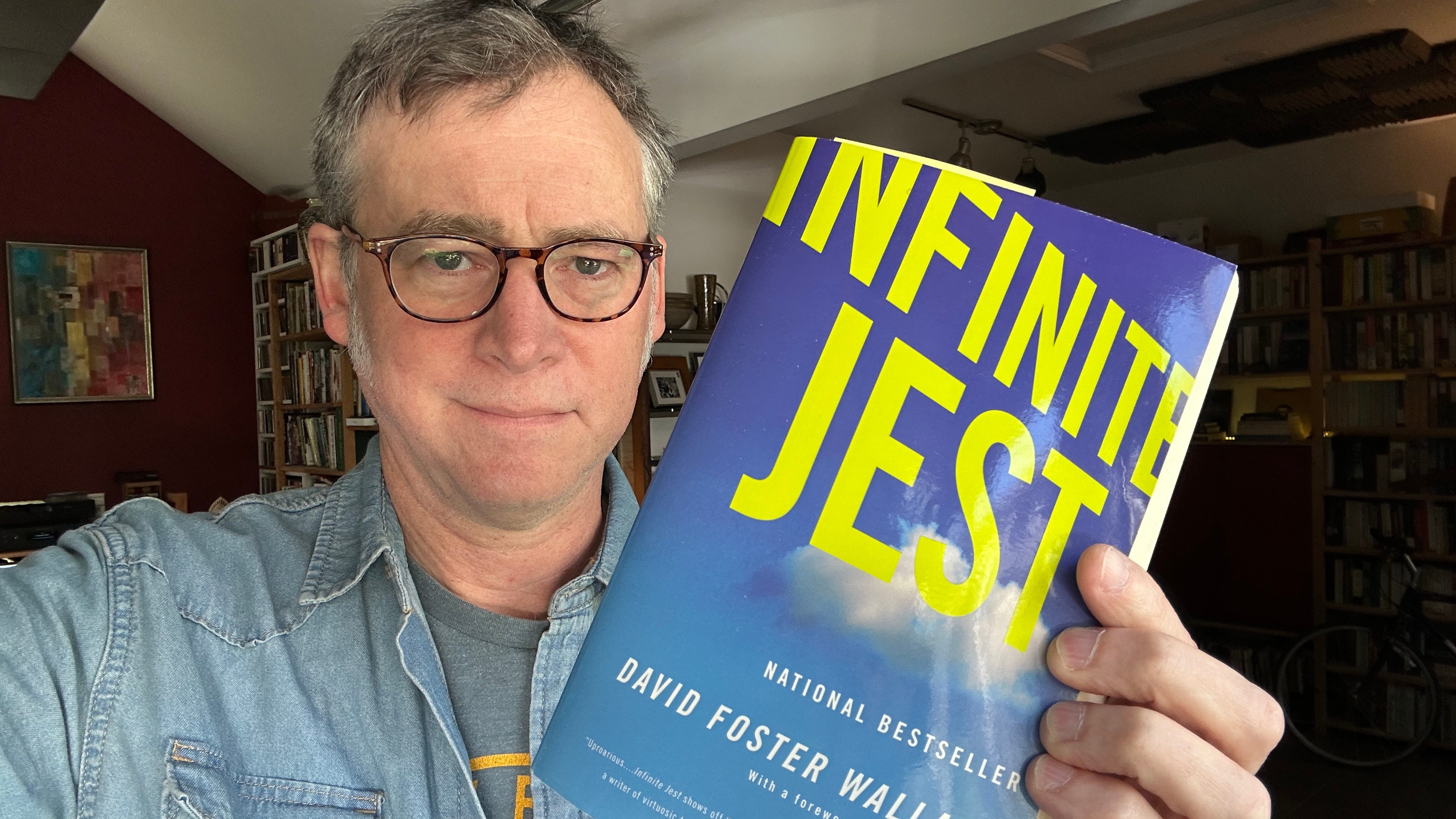
Then in my efforts to withdraw from the 2026 shitshow and occupy my mind, I started to crave a long novel. Because when mega-novels are great, there’s nothing like them. I’m a Lord of the Rings fan and have read it twice in the last 10 years. When Trump won the first time, I buried myself in Moby Dick and it was amazing. Last year, I read Barbara Kingsolver’s Demon Copperhead (thank you Rick Kelly) and it was an elevated, deeply moving and transforming experience, reading at its most rewarding.
So in January, I decided to try again with Jest. To steel my resolve, I did some reading and inquiring about advice for how to negotiate it. A Reddit forum pointed me to a chapter summary guide and suggested being really open minded well past page 300. Let it all wash over you, and about a third in, things will start to come into focus, they said. Scenes will start to feel deeper and more convincing. You’ll develop feelings for the characters, as quirky as some of them are.
Then I asked Chat GPT for some spoiler-free orientation, and it was helpful. I was by then on page 200 or so and it reassured me that “You’re not supposed to understand it yet.” Fine. More useful was:
Don’t skip the endnotes. (Me: I am used to DFW’s penchant for footnotes, but wow!)
Don’t read it too fast. (Me: No danger of that!)
If confused, keep going instead of rereading immediately.
“It’s a novel that metabolizes confusion into meaning,” said the AI. That’s a nice way to think about it. Then I told GPT about how much I loved David Foster Wallace’s nonfiction and told it about my favorite essay, Authority And American Usage. I asked it for thematic connections, and its replies were surprisingly insightful and orienting. So I’m well on my away, p 418 as of this writing. And I’m having a great time with it. DFW’s prose is extravagant, wild, exotic and challenging. He’s devilishly funny. And the thematic material - how addiction and entertainment are braided together in post-modern America - is very much up my alley. It’s speculative fiction set a few years into the next century (a little after where we are now) and Wallace shows some impressive prescience about things like the death of network TV and the rise of personal entertainment cocoons.
One more thing. About two weeks after I got serious, I see a profusion of articles about Infinite Jest. It feels like a total coincidence, but it turns out 2026 is the book’s 30th anniversary and some bookish people wanted to write about it the way I recently did about O Brother, Where Art Thou? It was published in 1996, and as it happens, that’s when I moved to Nashville. Also as it happens, I’m turning 60 this year (I’m team Fire Horse), and I’m kind of tickled that I’ve been in Nashville half my life. I think it’s also cute that this year is the 15th anniversary of Taylor and me adopting our daughter, thus half of the time I’ve been here. Call me a numerologist. It’s fun. And a sign to keep rolling on - with Nashville, with my girls, and with this life passage of a book.
Anybody else? I’d love to compare notes with folks who’ve read it!
New Work


